


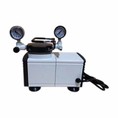
Hey there, fellow lab enthusiasts! As a supplier of vacuum filtration pumps, I've seen firsthand the importance of choosing the right one for your laboratory needs. In this blog post, I'm going to break down the different types of vacuum filtration pumps and help you figure out which one is the best fit for your lab.
Types of Vacuum Filtration Pumps
There are several types of vacuum filtration pumps available on the market, each with its own set of advantages and disadvantages. Let's take a look at some of the most common types:
Diaphragm Pumps
Diaphragm pumps are a popular choice for laboratory use because they are relatively quiet, oil-free, and require minimal maintenance. These pumps work by using a flexible diaphragm to create a vacuum. As the diaphragm moves up and down, it creates a pressure difference that draws air through the pump and out the exhaust.
One of the main advantages of diaphragm pumps is that they are suitable for a wide range of applications, including filtration, degassing, and evaporation. They are also relatively inexpensive compared to other types of vacuum pumps, making them a great option for budget-conscious labs.
However, diaphragm pumps do have some limitations. They typically have a lower vacuum level compared to other types of pumps, which means they may not be suitable for applications that require a high degree of vacuum. Additionally, the diaphragms in these pumps can wear out over time, which may require replacement.
Rotary Vane Pumps
Rotary vane pumps are another common type of vacuum pump used in laboratories. These pumps work by using a rotor with vanes that slide in and out of slots in the rotor. As the rotor spins, the vanes create a seal against the pump housing, which allows the pump to create a vacuum.
One of the main advantages of rotary vane pumps is that they can achieve a higher vacuum level compared to diaphragm pumps. This makes them suitable for applications that require a high degree of vacuum, such as distillation and freeze-drying. They are also relatively fast and efficient, which can save you time in the lab.
However, rotary vane pumps do have some drawbacks. They require oil to lubricate the vanes and seals, which can make them messy and require regular maintenance. They also tend to be louder and more expensive compared to diaphragm pumps.
Scroll Pumps
Scroll pumps are a newer type of vacuum pump that are becoming increasingly popular in laboratories. These pumps work by using two spiral-shaped scrolls that intermesh with each other. As one scroll orbits around the other, it creates a series of chambers that trap and compress air, which allows the pump to create a vacuum.
One of the main advantages of scroll pumps is that they are oil-free, which means they are clean and require minimal maintenance. They are also relatively quiet and energy-efficient, which can save you money on your electricity bill. Additionally, scroll pumps can achieve a high vacuum level, making them suitable for a wide range of applications.
However, scroll pumps do have some limitations. They are typically more expensive compared to diaphragm pumps, which may make them less suitable for budget-conscious labs. They also have a lower pumping speed compared to rotary vane pumps, which may make them less suitable for applications that require a high volume of air to be pumped.
Which Type of Vacuum Filtration Pump is More Suitable for Laboratory Use?
So, which type of vacuum filtration pump is more suitable for laboratory use? The answer depends on several factors, including the specific application, the required vacuum level, the budget, and the available space in the lab.
If you are looking for a quiet, oil-free pump that requires minimal maintenance and is suitable for a wide range of applications, then a diaphragm pump may be the best option for you. Diaphragm pumps are also relatively inexpensive, making them a great choice for budget-conscious labs. Check out our PS-20 Vacuum Filtration Pump and PS-10 Vacuum Filtration Pump for reliable diaphragm pump options.
If you need a pump that can achieve a high vacuum level and is suitable for applications that require a high degree of vacuum, such as distillation and freeze-drying, then a rotary vane pump may be the best option for you. Rotary vane pumps are also relatively fast and efficient, which can save you time in the lab. However, keep in mind that they require oil to lubricate the vanes and seals, which can make them messy and require regular maintenance.

If you are looking for a clean, oil-free pump that is quiet, energy-efficient, and can achieve a high vacuum level, then a scroll pump may be the best option for you. Scroll pumps are also relatively low-maintenance, which can save you time and money in the long run. However, they are typically more expensive compared to diaphragm pumps, which may make them less suitable for budget-conscious labs.

Conclusion
Choosing the right vacuum filtration pump for your laboratory is an important decision that can have a significant impact on the efficiency and effectiveness of your experiments. By considering the specific application, the required vacuum level, the budget, and the available space in the lab, you can select the pump that is best suited for your needs.
If you have any questions or need further assistance in choosing the right vacuum filtration pump for your laboratory, please don't hesitate to contact us. We're here to help you find the perfect pump for your application and ensure that you get the most out of your investment.
References
- "Vacuum Pumps: Principles and Practice" by John F. O'Hanlon
- "Handbook of Vacuum Physics" by L. Holland
- "Vacuum Technology for Scientists and Engineers" by John F. O'Hanlon