


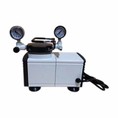
As a provider of vacuum filtration systems, I've witnessed firsthand the significant role that filter shape plays in the overall performance and efficiency of these systems. In this blog post, I'll delve into the various ways in which filter shape can influence a vacuum filtration system, drawing on my experience in the industry and the knowledge I've gained from working with a wide range of clients.


Understanding the Basics of Vacuum Filtration
Before we explore the influence of filter shape, it's important to have a basic understanding of how vacuum filtration systems work. At their core, these systems use a vacuum source to create a pressure differential across a filter medium. This pressure differential forces the liquid or gas being filtered through the filter, leaving behind the solid particles or contaminants.
The filter medium is a critical component of the system, as it determines the size of the particles that can be removed and the efficiency of the filtration process. There are many different types of filter media available, including paper, cloth, mesh, and membrane filters, each with its own unique properties and applications.
The Impact of Filter Shape on Flow Distribution
One of the most significant ways in which filter shape can influence a vacuum filtration system is through its impact on flow distribution. The shape of the filter can affect how the liquid or gas being filtered flows through the system, which in turn can affect the efficiency of the filtration process.
For example, a flat filter with a uniform surface area will typically provide a more even flow distribution than a filter with a complex shape or irregular surface. This is because the flat filter presents a consistent resistance to the flow of the liquid or gas, allowing it to pass through the filter evenly. In contrast, a filter with a complex shape may create areas of high and low flow, which can lead to uneven filtration and reduced efficiency.
Another factor to consider is the orientation of the filter. In some cases, the filter may need to be oriented in a specific direction to ensure optimal flow distribution. For example, a cylindrical filter may need to be positioned vertically to allow the liquid or gas to flow through it evenly.
The Effect of Filter Shape on Particle Retention
The shape of the filter can also have a significant impact on its ability to retain particles. Different filter shapes can provide different levels of surface area and pore size, which can affect the size and quantity of particles that can be captured.
For example, a pleated filter has a larger surface area than a flat filter of the same size, which allows it to capture more particles. The pleats in the filter create additional surface area for the particles to adhere to, increasing the filter's capacity and efficiency. In addition, the pleats can help to prevent the particles from clogging the filter, as they provide channels for the liquid or gas to flow through.
On the other hand, a filter with a small pore size may be more effective at capturing smaller particles, but it may also be more prone to clogging. In this case, the shape of the filter can play a role in preventing clogging by providing a larger surface area for the particles to be distributed across.
The Influence of Filter Shape on System Pressure Drop
The shape of the filter can also affect the pressure drop across the vacuum filtration system. Pressure drop refers to the difference in pressure between the inlet and outlet of the filter, and it is an important factor to consider when designing and operating a vacuum filtration system.
A filter with a complex shape or irregular surface may create a higher pressure drop than a flat filter of the same size. This is because the complex shape can create areas of high resistance to the flow of the liquid or gas, which can increase the pressure required to force it through the filter. In addition, a filter with a small pore size may also create a higher pressure drop, as it requires more pressure to force the liquid or gas through the smaller pores.
A high pressure drop can have several negative effects on the vacuum filtration system. It can reduce the flow rate of the liquid or gas being filtered, which can decrease the efficiency of the system. It can also increase the energy consumption of the vacuum pump, as it requires more power to maintain the required pressure.
Practical Considerations for Filter Shape Selection
When selecting a filter shape for a vacuum filtration system, there are several practical considerations to keep in mind. These include the type of liquid or gas being filtered, the size and quantity of particles to be removed, the flow rate and pressure requirements of the system, and the available space and budget.
For example, if you are filtering a liquid with a high concentration of large particles, a pleated filter may be a good choice, as it can provide a large surface area for the particles to be captured. On the other hand, if you are filtering a gas with a low concentration of small particles, a flat filter may be sufficient.
In addition, the available space and budget may also limit your filter shape options. A large, complex filter may require more space and be more expensive than a simple, flat filter. Therefore, it's important to consider these factors when making your decision.
Our Range of Vacuum Filtration Systems
At our company, we offer a wide range of vacuum filtration systems to meet the diverse needs of our customers. Our systems are available in a variety of filter shapes and sizes, including Stainless Steel One Branch Vacuum Filtration System, Glass One Branch Vacuum Filtration System, and Stainless Steel Six Branches Vacuum Filtration System.
Our stainless steel filtration systems are durable and resistant to corrosion, making them ideal for use in harsh environments. The glass filtration systems, on the other hand, are transparent, allowing you to easily monitor the filtration process. And our multi-branch filtration systems are designed to handle high flow rates and large volumes of liquid or gas.
Conclusion
In conclusion, the shape of the filter can have a significant influence on the performance and efficiency of a vacuum filtration system. It can affect flow distribution, particle retention, system pressure drop, and other important factors. Therefore, it's important to carefully consider the filter shape when designing and operating a vacuum filtration system.
If you have any questions or need assistance in selecting the right vacuum filtration system for your application, please don't hesitate to contact us. Our team of experts is always ready to help you find the best solution for your needs.
References
- "Filtration Principles and Practices", Third Edition, by Orr, C. and Dybbs, A.
- "Handbook of Industrial Filtration", Second Edition, edited by Wakeman, R. and Tarleton, E.
- "Vacuum Filtration Handbook", by Schubert, H. and Gösele, U.