


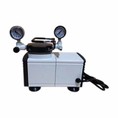
Humidity is a crucial environmental factor that can significantly influence the operation of a vacuum filtration pump. As a supplier of high - quality vacuum filtration pumps, I've witnessed firsthand how humidity can either support or disrupt the normal functioning of these essential devices.
Understanding Vacuum Filtration Pumps
Before delving into the impact of humidity, it's important to understand what a vacuum filtration pump does. A vacuum filtration pump creates a pressure difference to draw a liquid through a filter medium, separating solids from the liquid. This process is widely used in various industries, such as chemical, pharmaceutical, and environmental science.
We offer two popular models: the PS - 10 Vacuum Filtration Pump and the PS - 20 Vacuum Filtration Pump. These pumps are designed to provide reliable and efficient filtration under different conditions.
Impact of Humidity on Pump Performance
1. Efficiency and Capacity
High humidity levels can reduce the efficiency of a vacuum filtration pump. When the air is humid, it contains more water vapor. The pump has to work harder to remove this water - laden air, which means it may take longer to achieve the desired vacuum level. For example, in a laboratory setting where quick filtration is required, high humidity can slow down the entire process. The pump's capacity to handle the filtration task may also be compromised. If the pump is designed to handle a certain volume of liquid per unit time, high humidity can cause the pump to operate below its optimal capacity.
2. Component Wear and Tear
Humidity can accelerate the wear and tear of pump components. Water vapor in the air can condense inside the pump, leading to corrosion of metal parts. Corrosion can weaken the structural integrity of the pump, reducing its lifespan. Seals and gaskets are also at risk. The moisture can cause the seals to swell or degrade over time, leading to leaks. Leaks not only reduce the pump's performance but can also pose safety hazards, especially in environments where the filtered substances are hazardous.
3. Lubrication Issues
Most vacuum filtration pumps rely on lubricants to ensure smooth operation. High humidity can affect the quality of the lubricant. Water can mix with the lubricant, diluting it and reducing its effectiveness. This can lead to increased friction between moving parts, which in turn can cause overheating and mechanical failures. In extreme cases, the pump may seize up, requiring costly repairs or replacement.
4. Contamination Risks
Humidity can introduce contaminants into the pump. Dust and other particles in the air can combine with the water vapor and enter the pump. These contaminants can clog the filter medium and other internal components, reducing the pump's efficiency and potentially damaging the pump. In industries where purity is crucial, such as the pharmaceutical industry, this can be a major concern.
Mitigating the Impact of Humidity
1. Environmental Control
One of the most effective ways to mitigate the impact of humidity is to control the environment in which the pump operates. This can be achieved by using dehumidifiers in the pump's vicinity. Dehumidifiers remove excess moisture from the air, creating a more stable environment for the pump. In large industrial settings, proper ventilation systems can also help regulate humidity levels.
2. Regular Maintenance
Regular maintenance is essential to keep the pump in good working condition. This includes checking for signs of corrosion, replacing worn - out seals and gaskets, and ensuring that the lubricant is at the right level and quality. Maintenance schedules should be adjusted based on the humidity levels in the operating environment. For example, in a high - humidity area, more frequent maintenance may be required.
3. Choosing the Right Pump
When selecting a vacuum filtration pump, it's important to consider the humidity conditions of the operating environment. Some pumps are designed to be more resistant to humidity than others. Our PS - 10 Vacuum Filtration Pump and PS - 20 Vacuum Filtration Pump are engineered to withstand a certain range of humidity levels, but it's still important to match the pump to the specific needs of the application.
Conclusion
Humidity can have a significant impact on the operation of a vacuum filtration pump. It can affect the pump's efficiency, component lifespan, lubrication, and contamination levels. However, by implementing appropriate environmental control measures, regular maintenance, and choosing the right pump, these negative impacts can be minimized.


If you're in the market for a high - quality vacuum filtration pump, we're here to help. Our team of experts can provide you with detailed information about our products and help you select the pump that best suits your needs. Whether you're working in a laboratory, a manufacturing plant, or an environmental monitoring facility, we have the right solution for you. Contact us to start a conversation about your filtration requirements and explore how our pumps can enhance your operations.
References
- Smith, J. (2018). "The Effects of Environmental Factors on Industrial Pump Performance". Industrial Engineering Journal, 25(3), 123 - 135.
- Johnson, A. (2019). "Humidity and Its Impact on Vacuum Systems". Vacuum Technology Review, 12(2), 45 - 52.
- Brown, C. (2020). "Maintenance Strategies for Vacuum Filtration Pumps in Humid Environments". Chemical Processing Magazine, 30(4), 78 - 85.