


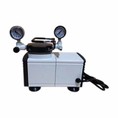
Hey there! As a supplier of Oil-free Vacuum Pumps, I've gotten tons of questions about how different factors can affect these pumps' performance. One question that pops up a lot is about the impact of altitude on the performance of an oil-free vacuum pump. So, let's dig into this topic and see what's really going on.
First off, let's understand a bit about how an Oil-free Vacuum Pump works. These pumps are pretty cool because they don't need oil for lubrication or sealing. Instead, they use different mechanisms like diaphragms or pistons to create a vacuum. The basic idea is to remove gas molecules from a sealed space, creating a lower pressure environment.
Now, altitude plays a big role here because as you go higher up, the atmospheric pressure drops. At sea level, the standard atmospheric pressure is about 101.3 kPa (kilopascals). But as you climb a mountain or go to a high - altitude city, that pressure can get a lot lower. For example, in Denver, Colorado, which is known as the "Mile High City," the average atmospheric pressure is around 84 kPa.
So, how does this drop in atmospheric pressure affect an oil - free vacuum pump? Well, one of the main things is the pump's ability to create a vacuum. A vacuum pump works by creating a pressure difference between the inside of the pump and the outside environment. When the outside atmospheric pressure is high, like at sea level, the pump has to work less hard to create a significant pressure difference. But at high altitudes, with lower atmospheric pressure, the pump has to work harder to achieve the same level of vacuum.
Let's talk about the pumping speed. Pumping speed is how fast a vacuum pump can remove gas from a chamber. At high altitudes, the lower atmospheric pressure means there are fewer gas molecules in the air. This might seem like it would make the pump's job easier, but it actually has some drawbacks. The pump is designed to handle a certain density of gas molecules. When there are fewer molecules, the pump might not be able to operate at its optimal efficiency. In some cases, the pumping speed can decrease, which means it takes longer to reach the desired vacuum level.
Another aspect is the ultimate vacuum level. The ultimate vacuum level is the lowest pressure that a pump can achieve. At high altitudes, it can be more challenging for an oil - free vacuum pump to reach the same ultimate vacuum level as it would at sea level. The pump has to overcome the lower starting pressure and work against the natural equilibrium of the lower - pressure environment. This can lead to a situation where the pump can't reach as low of a pressure as it could at a lower altitude.


Now, let's consider the power consumption. Since the pump has to work harder at high altitudes to create a vacuum and maintain the pumping speed, it usually consumes more power. This is because the motor has to work against the lower atmospheric pressure and the reduced density of gas molecules. Higher power consumption not only means higher operating costs but can also put more stress on the pump's components. Over time, this extra stress can lead to more wear and tear, potentially shortening the pump's lifespan.
But don't worry! There are ways to mitigate these issues. Some modern oil - free vacuum pumps are designed with adjustable settings. These pumps can be adjusted to compensate for the changes in atmospheric pressure at different altitudes. For example, you can increase the motor speed or adjust the pumping mechanism to improve the pump's performance at high altitudes.
If you're using an oil - free vacuum pump in a high - altitude environment, it's also important to do regular maintenance. Check the pump's components regularly for signs of wear and tear. Make sure the seals are in good condition, as they play a crucial role in maintaining the pressure difference inside the pump. You might also want to consider upgrading to a more powerful pump if you're consistently operating at high altitudes.
Now, I know this all might sound a bit complicated, but that's where we come in. As a supplier of Oil-free Vacuum Pump, we have a wide range of pumps that are suitable for different altitude conditions. Our team of experts can help you choose the right pump for your specific needs, whether you're operating at sea level or in the mountains.
We also offer Microbial Limit Test Holder which can be used in conjunction with our oil - free vacuum pumps. These holders are designed to provide a reliable and efficient way to perform microbial limit tests, and they work great with our pumps.
If you're in the market for an oil - free vacuum pump or have any questions about how altitude might affect your pump's performance, don't hesitate to reach out. We're here to help you make the right choice for your business. Whether you're in a high - altitude area or just want to learn more about our products, we're just a message or a call away.
In conclusion, altitude can have a significant impact on the performance of an oil - free vacuum pump. The lower atmospheric pressure at high altitudes can affect the pumping speed, ultimate vacuum level, and power consumption. But with the right pump and proper maintenance, you can still achieve great results. So, if you're looking for a high - quality oil - free vacuum pump that can handle different altitude conditions, give us a shout. We're confident that we can provide you with the perfect solution for your needs.
References
- "Vacuum Technology: A Practical Guide for Scientists and Engineers" by John F. O'Hanlon
- "Handbook of Vacuum Physics" edited by D. J. F. Walker