


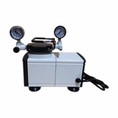
When it comes to laboratory equipment, vacuum filtration pumps play a crucial role in various scientific and industrial processes. As a leading supplier of vacuum filtration pumps, I often receive inquiries about the flow rate of these devices. In this blog post, I will delve into the concept of flow rate, explain what a typical flow rate for a vacuum filtration pump is, and discuss how it impacts the performance of the filtration process.
Understanding Flow Rate
Flow rate, in the context of a vacuum filtration pump, refers to the volume of gas or liquid that the pump can move through the system per unit of time. It is typically measured in liters per minute (L/min) or cubic feet per minute (CFM). The flow rate is a critical parameter because it determines how quickly the filtration process can be completed. A higher flow rate generally means that the pump can remove the filtrate more rapidly, reducing the overall filtration time.
Factors Affecting Flow Rate
Several factors can influence the flow rate of a vacuum filtration pump. These include the pump's design, the type of motor used, the size of the inlet and outlet ports, and the resistance in the filtration system.
- Pump Design: Different pump designs have different flow rate capabilities. For example, diaphragm pumps are known for their relatively high flow rates and are often used in applications where large volumes of filtrate need to be processed quickly. On the other hand, rotary vane pumps may have lower flow rates but can achieve higher vacuum levels, making them suitable for more precise filtration tasks.
- Motor Power: The power of the motor driving the pump is directly related to the flow rate. A more powerful motor can generate more force, allowing the pump to move more gas or liquid through the system. However, it's important to note that increasing the motor power also increases the energy consumption of the pump.
- Port Size: The size of the inlet and outlet ports of the pump can affect the flow rate. Larger ports allow for a greater volume of gas or liquid to pass through the pump, resulting in a higher flow rate. However, larger ports may also increase the resistance in the system, which can reduce the overall efficiency of the pump.
- System Resistance: The resistance in the filtration system, including the filter media, tubing, and fittings, can have a significant impact on the flow rate. A high-resistance system will require more energy from the pump to maintain a given flow rate. If the resistance is too high, the pump may not be able to achieve the desired flow rate, leading to longer filtration times.
Typical Flow Rates for Vacuum Filtration Pumps
The flow rate of a typical vacuum filtration pump can vary widely depending on the specific model and application. In general, laboratory-grade vacuum filtration pumps can have flow rates ranging from a few liters per minute to several hundred liters per minute.
For small-scale laboratory applications, such as filtering small volumes of samples in a research setting, pumps with flow rates of 5 - 20 L/min are often sufficient. These pumps are typically compact and energy-efficient, making them ideal for use in limited laboratory spaces.
For larger-scale industrial applications, such as in pharmaceutical manufacturing or chemical processing, pumps with higher flow rates are required. Flow rates of 50 - 200 L/min or more are common in these applications. These pumps are designed to handle large volumes of filtrate and are often more robust and durable than their laboratory counterparts.
Our Product Offerings
As a supplier of vacuum filtration pumps, we offer a range of products to meet the diverse needs of our customers. Two of our popular models are the PS-20 Vacuum Filtration Pump and the PS-10 Vacuum Filtration Pump.
The PS-20 Vacuum Filtration Pump is a high-performance pump designed for medium to large-scale applications. It has a flow rate of up to 20 L/min, making it suitable for filtering larger volumes of samples quickly and efficiently. The pump features a durable diaphragm design and a powerful motor, ensuring reliable operation and long service life.
The PS-10 Vacuum Filtration Pump, on the other hand, is a more compact and energy-efficient option for small-scale laboratory applications. It has a flow rate of up to 10 L/min, which is sufficient for most routine filtration tasks. The pump is easy to operate and maintain, making it a popular choice among researchers and technicians.
Choosing the Right Flow Rate for Your Application
When selecting a vacuum filtration pump, it's important to choose a pump with a flow rate that is appropriate for your specific application. Consider the volume of filtrate that needs to be processed, the desired filtration time, and the resistance in your filtration system. If you're unsure which pump is right for you, our team of experts is available to provide you with personalized advice and recommendations.
Conclusion
The flow rate of a vacuum filtration pump is a critical factor that can significantly impact the performance of the filtration process. By understanding the factors that affect flow rate and choosing a pump with the appropriate flow rate for your application, you can ensure efficient and reliable filtration. As a trusted supplier of vacuum filtration pumps, we are committed to providing our customers with high-quality products and exceptional service. If you're interested in learning more about our vacuum filtration pumps or have any questions about flow rate or other technical specifications, please don't hesitate to contact us. We look forward to discussing your filtration needs and helping you find the perfect solution.


References
- Perry, R. H., & Green, D. W. (Eds.). (1997). Perry's Chemical Engineers' Handbook (7th ed.). McGraw-Hill.
- Shreir, L. L., Jarman, R. A., & Burstein, G. T. (Eds.). (1994). Corrosion (4th ed.). Butterworth-Heinemann.