


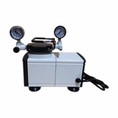
Vacuum pumps are essential equipment in various industries, ranging from scientific research and medical applications to manufacturing and food processing. When it comes to selecting a vacuum pump, one of the primary decisions is whether to choose an oil - free vacuum pump or an oil - lubricated vacuum pump. As a supplier of Oil-free Vacuum Pump, I am well - versed in the differences between these two types of pumps, and in this blog, I will delve into the details to help you make an informed decision.
Working Principle
The fundamental difference between oil - free and oil - lubricated vacuum pumps lies in their working principles.
Oil - Lubricated Vacuum Pump
Oil - lubricated vacuum pumps use oil for multiple purposes. Firstly, the oil acts as a lubricant, reducing friction between moving parts such as pistons, rotors, and vanes. This lubrication helps to extend the lifespan of the pump by minimizing wear and tear. Secondly, the oil serves as a sealant. It fills the small gaps between the moving parts and the pump housing, preventing air from leaking back into the vacuum chamber. For example, in a rotary vane oil - lubricated vacuum pump, the vanes slide along the inner wall of the rotor, and the oil forms a tight seal, allowing the pump to create a high - level vacuum.
Oil - Free Vacuum Pump
Oil - free vacuum pumps, on the other hand, operate without the use of oil for lubrication and sealing. Instead, they rely on alternative materials and design features. Some oil - free pumps use dry diaphragms, which are made of flexible materials like rubber or PTFE. These diaphragms expand and contract to create a pumping action, similar to how a piston moves in a cylinder. Other oil - free pumps use scroll technology, where two interleaved scrolls rotate relative to each other to compress and move the gas. Since there is no oil involved, there is no risk of oil contamination in the pumped gas or the surrounding environment.
Performance
Performance is a crucial factor when choosing a vacuum pump, and there are significant differences between oil - free and oil - lubricated pumps in this regard.
Vacuum Level
Oil - lubricated vacuum pumps generally have the ability to achieve a much higher vacuum level compared to oil - free pumps. The oil acts as an effective sealant, reducing the leakage of air and allowing the pump to create a more perfect vacuum. In applications where a very high vacuum is required, such as in semiconductor manufacturing or high - energy physics experiments, oil - lubricated pumps are often the preferred choice.
However, modern oil - free vacuum pumps have made significant progress in recent years. Some high - end oil - free pumps can now achieve a vacuum level that is sufficient for many common applications, such as laboratory filtration and small - scale vacuum packaging.
Pumping Speed
Pumping speed refers to the volume of gas that a pump can remove from a chamber per unit of time. Oil - lubricated pumps typically have a higher pumping speed than oil - free pumps. The oil helps to reduce the internal resistance of the pump, allowing it to move gas more efficiently. This makes oil - lubricated pumps suitable for applications where large volumes of gas need to be removed quickly, such as in large - scale industrial vacuum systems.
Oil - free pumps, while having a lower pumping speed in general, are still suitable for applications where the gas volume is relatively small. For example, in a Microbial Limit Test Holder used in microbiology laboratories, the oil - free pump can provide a stable and clean vacuum environment for the test, even with its relatively lower pumping speed.
Maintenance
Maintenance requirements are another area where oil - free and oil - lubricated vacuum pumps differ significantly.
Oil - Lubricated Vacuum Pump
Oil - lubricated pumps require regular oil changes. Over time, the oil can become contaminated with particles, moisture, and chemical vapors from the pumped gas. Contaminated oil can reduce the performance of the pump and cause damage to the internal components. The frequency of oil changes depends on the operating conditions and the type of pump, but it can range from a few months to a year.
In addition to oil changes, oil - lubricated pumps also need to have their oil filters replaced regularly. The oil filter helps to remove contaminants from the oil, but it can become clogged over time. Other maintenance tasks include checking and adjusting the belt tension, inspecting the seals for leaks, and cleaning the pump's internal components.
Oil - Free Vacuum Pump
One of the main advantages of oil - free vacuum pumps is their low maintenance requirements. Since there is no oil to change, the maintenance process is much simpler. Most oil - free pumps only require periodic cleaning of the intake filters to prevent clogging. Some pumps may also need to have their diaphragms or other wear parts replaced after a certain number of operating hours, but this is generally less frequent and less labor - intensive compared to the maintenance of oil - lubricated pumps.
Environmental Impact
In today's environmentally conscious world, the environmental impact of equipment is an important consideration.
Oil - Lubricated Vacuum Pump
Oil - lubricated pumps can have a negative environmental impact. The oil used in the pumps can be a source of pollution if it is not properly disposed of. Spills or leaks of oil can contaminate the soil and water, and the oil vapors released during operation can contribute to air pollution. In addition, the energy consumption of oil - lubricated pumps is often higher than that of oil - free pumps, which also has an impact on the environment.
Oil - Free Vacuum Pump
Oil - free vacuum pumps are more environmentally friendly. Since they do not use oil, there is no risk of oil pollution. They also tend to consume less energy, which reduces their carbon footprint. In applications where environmental regulations are strict, such as in the pharmaceutical and food industries, oil - free pumps are often the preferred choice.


Cost
Cost is always a factor when making a purchasing decision.
Initial Cost
Oil - free vacuum pumps generally have a higher initial cost compared to oil - lubricated pumps. The advanced materials and design features used in oil - free pumps, such as dry diaphragms and scroll technology, make them more expensive to manufacture. However, the price difference has been decreasing in recent years as the technology has become more widespread.
Operating Cost
When considering the operating cost, oil - lubricated pumps may have higher costs in the long run. The cost of oil changes, filter replacements, and potential repairs can add up over time. In contrast, the low maintenance requirements of oil - free pumps result in lower operating costs. Additionally, the lower energy consumption of oil - free pumps can also lead to savings on electricity bills.
Conclusion
In summary, the choice between an oil - free vacuum pump and an oil - lubricated vacuum pump depends on several factors, including the required vacuum level, pumping speed, maintenance requirements, environmental impact, and cost. Oil - lubricated pumps are suitable for applications that require a high vacuum level and a high pumping speed, but they come with higher maintenance requirements and a greater environmental impact. Oil - free pumps, on the other hand, offer a cleaner and more environmentally friendly solution with lower maintenance requirements, and they are sufficient for many common applications.
As a supplier of Oil-free Vacuum Pump, I understand the unique needs of different industries and applications. If you are in the process of selecting a vacuum pump, I encourage you to contact me to discuss your specific requirements. I can provide you with detailed information and guidance to help you choose the most suitable pump for your needs. Whether you are in the laboratory, manufacturing, or any other industry, I am here to assist you in making the right decision.
References
- "Vacuum Technology Handbook", edited by Peter L. A. Popovic
- "Fundamentals of Vacuum Physics and Technology", by R. S. Sorbello
- Industry reports on vacuum pump technology and applications