


What are the units of measurement in the results of a Microbial Limit Test Holder?
As a supplier of Microbial Limit Test Holders, I often encounter questions from customers regarding the units of measurement in the results of these tests. Understanding these units is crucial for accurately interpreting the data and ensuring compliance with regulatory standards in the pharmaceutical, food, and cosmetic industries.
The Basics of Microbial Limit Testing
Microbial limit testing is a critical quality control procedure used to determine the number and types of microorganisms present in a sample. The Microbial Limit Test Holder is an essential tool in this process, providing a controlled environment for filtering and culturing samples. The test aims to detect the presence of specific microorganisms, such as bacteria, fungi, and yeasts, and quantify their levels to ensure that the product meets the required microbial quality standards.
Common Units of Measurement
-
Colony-Forming Units per Milliliter (CFU/mL)
This is one of the most commonly used units in microbial limit testing. A colony-forming unit (CFU) represents a single viable microorganism that can grow into a visible colony on an agar plate. When testing liquid samples, such as pharmaceutical solutions or food beverages, the results are typically reported as CFU/mL. For example, if a sample of a pharmaceutical product is tested, and the result shows 50 CFU/mL, it means that there are approximately 50 viable microorganisms per milliliter of the sample. -
Colony-Forming Units per Gram (CFU/g)
For solid samples, such as powders, creams, or solid food products, the results are usually reported as CFU/g. This unit measures the number of viable microorganisms per gram of the sample. For instance, in a cosmetic powder, if the test result indicates 100 CFU/g, it implies that there are about 100 viable microorganisms in every gram of the powder. -
Most Probable Number (MPN)
The Most Probable Number method is used when the microorganisms in a sample are not evenly distributed or when the sample contains substances that may inhibit the growth of microorganisms on agar plates. The MPN is an estimate of the number of viable microorganisms in a sample based on statistical analysis of the growth patterns in multiple tubes or wells containing different dilutions of the sample. The results are reported as MPN per unit volume (e.g., MPN/mL) or per unit weight (e.g., MPN/g).

-
Absence/Presence
In some cases, the test may simply determine the absence or presence of specific microorganisms. For example, a test may be designed to detect the presence of Salmonella in a food product. The result will be reported as either "Absence" or "Presence" of the target microorganism. This type of result is often used for regulatory purposes, where the presence of certain pathogens is not acceptable in the product.
Importance of Accurate Measurement Units
Accurate reporting of the units of measurement in microbial limit test results is essential for several reasons. Firstly, it allows for clear communication between laboratories, manufacturers, and regulatory authorities. Standardized units ensure that everyone understands the significance of the test results and can make informed decisions regarding product quality and safety.
Secondly, accurate measurement units are necessary for comparing results across different batches of products or different laboratories. This is particularly important in industries where consistency and reproducibility are critical, such as the pharmaceutical industry. By using the same units of measurement, manufacturers can ensure that their products meet the same quality standards over time.
Finally, accurate reporting of units is required for compliance with regulatory requirements. Regulatory agencies, such as the United States Pharmacopeia (USP), the European Pharmacopoeia (EP), and the World Health Organization (WHO), have specific guidelines on the acceptable limits of microorganisms in different types of products. These guidelines often specify the units of measurement that should be used in reporting the test results.
Factors Affecting Measurement Units
Several factors can affect the choice of measurement units in microbial limit testing. The nature of the sample is one of the most important factors. As mentioned earlier, liquid samples are typically reported in CFU/mL, while solid samples are reported in CFU/g. The type of microorganisms being tested can also influence the choice of units. Some microorganisms may be more difficult to culture and quantify, and alternative methods, such as the MPN method, may be required.
The sensitivity of the testing method is another factor. Some methods may be more sensitive than others, allowing for the detection of lower levels of microorganisms. In such cases, more precise units of measurement may be necessary to accurately report the results.
Role of the Microbial Limit Test Holder
The Microbial Limit Test Holder plays a crucial role in ensuring accurate measurement of microorganisms. It provides a standardized and controlled environment for filtering the sample, which helps to ensure that the test results are reproducible. The holder is designed to hold the filter membrane securely in place, preventing any leakage or contamination during the filtration process.
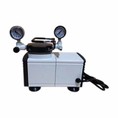
In addition, the Microbial Limit Test Holder is often used in conjunction with an Oil-free Vacuum Pump to facilitate the filtration of the sample. The vacuum pump creates a negative pressure that draws the sample through the filter membrane, trapping the microorganisms on the surface of the membrane. This allows for the subsequent culturing and quantification of the microorganisms.
Conclusion
In conclusion, understanding the units of measurement in the results of a Microbial Limit Test Holder is essential for ensuring the accuracy and reliability of microbial limit testing. The most common units include CFU/mL, CFU/g, MPN, and absence/presence. These units provide valuable information about the number and types of microorganisms present in a sample, which is crucial for product quality control and regulatory compliance.
As a supplier of Microbial Limit Test Holders, we are committed to providing high-quality products that meet the needs of our customers. Our products are designed to ensure accurate and reproducible microbial limit testing, and we offer comprehensive technical support to help our customers understand and interpret the test results.
If you are interested in learning more about our Microbial Limit Test Holders or have any questions about microbial limit testing, please feel free to contact us for a procurement discussion. We look forward to working with you to ensure the quality and safety of your products.
References
- United States Pharmacopeia (USP). General Chapter <61> Microbiological Examination of Nonsterile Products: Microbial Enumeration Tests.
- European Pharmacopoeia (EP). General Chapter 2.6.12 Microbiological Examination of Non-Sterile Products: Microbial Enumeration Tests.
- World Health Organization (WHO). Guidelines on Microbiological Quality Control for Non-Sterile Pharmaceutical Products.