



Hey there! As a supplier of Silica Based Spherical products, I've seen firsthand how temperature can play a huge role in the properties of these little guys. So, let's dive into what the effects of temperature are on the properties of silica based spherical particles.
Physical Properties
First off, let's talk about the physical properties. One of the most obvious things that temperature affects is the size and shape of the silica based spherical particles. When the temperature goes up, the particles tend to expand. This is because the heat energy causes the molecules within the particles to move more vigorously, pushing against each other and making the particle larger.
On the other hand, when the temperature drops, the particles contract. This contraction can be quite significant, especially if the temperature change is large. For example, in some industrial processes where precise particle size is crucial, even a small temperature fluctuation can lead to changes in the product quality.
The density of the silica based spherical particles is also affected by temperature. As the particles expand with increasing temperature, their density decreases. This is because the same mass of material is now occupying a larger volume. Conversely, when the temperature decreases and the particles contract, the density increases.
Another physical property that is influenced by temperature is the surface area of the particles. At higher temperatures, the surface of the silica based spherical particles can become more active. This is because the increased thermal energy can break some of the weak bonds on the surface, exposing more reactive sites. This can be both a good and a bad thing. In some applications, like catalysis, a more active surface can enhance the reaction rate. But in other cases, it can lead to unwanted side reactions or interactions with other substances.
Chemical Properties
Now, let's move on to the chemical properties. Temperature can have a profound impact on the chemical reactivity of silica based spherical particles. Generally, an increase in temperature speeds up chemical reactions. This is because the higher temperature provides more energy for the reactant molecules to overcome the activation energy barrier.
For silica based spherical particles, this means that they can react more readily with other chemicals at higher temperatures. For example, they might react with acids or bases more quickly. This can be useful in some chemical processes, like the synthesis of certain compounds where the silica particles act as a catalyst or a reactant.
However, high temperatures can also cause some chemical changes within the silica particles themselves. At very high temperatures, the silica can start to undergo phase transitions. For instance, amorphous silica can transform into a crystalline form. This change in structure can have a significant impact on the properties of the particles, such as their solubility and reactivity.
The surface chemistry of the silica based spherical particles is also affected by temperature. The hydroxyl groups on the surface of the silica particles can be influenced by temperature. At higher temperatures, some of these hydroxyl groups might be removed through a process called dehydroxylation. This can change the surface charge and the ability of the particles to interact with other molecules.
Thermal Stability
Thermal stability is an important property for silica based spherical particles, especially in applications where they are exposed to high temperatures. Silica is generally known for its good thermal stability, but it still has its limits.
At moderate temperatures, silica based spherical particles can maintain their structure and properties quite well. But as the temperature approaches the melting point of silica (around 1700°C), the particles start to soften and eventually melt. Before reaching the melting point, there can be some changes in the mechanical properties of the particles. They might become more brittle or lose their spherical shape.
The thermal stability of the silica based spherical particles can also be affected by impurities or additives. Some impurities can lower the melting point or cause other thermal instabilities. For example, if there are metal impurities in the silica, they can form low - melting - point eutectics with the silica, reducing its thermal stability.
Applications and Temperature Considerations
In different applications, the effects of temperature on silica based spherical particles need to be carefully considered. For example, in chromatography, which uses Silica Based Spherical and Silica Based Amorphous Packing, temperature can affect the separation efficiency. A change in temperature can alter the interaction between the analytes and the silica particles, leading to changes in the retention time and peak shape.
In the production of optical fibers, where silica is a key material, temperature control is crucial. The silica based spherical particles need to be heated and processed at very precise temperatures to ensure the desired optical properties. Any deviation in temperature can result in defects in the fiber, such as changes in the refractive index or the formation of bubbles.
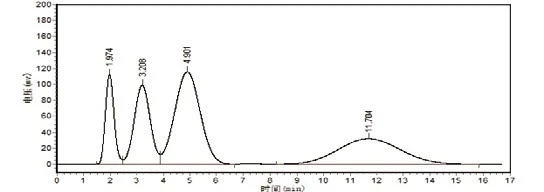

In the field of catalysis, the temperature effects on the reactivity and surface properties of silica based spherical particles are of great importance. The optimal temperature for a catalytic reaction using silica particles needs to be determined to achieve the highest reaction rate and selectivity.
Our Role as a Supplier
As a supplier of Silica Based Spherical products, we understand the importance of temperature in relation to the properties of these particles. We ensure that our products are manufactured under strict temperature control to maintain their quality and consistency.
We also provide detailed information to our customers about the temperature limitations and optimal operating conditions for our silica based spherical particles. This helps them to make the most of our products in their specific applications.
If you're in need of high - quality Silica Based Spherical particles for your project, whether it's for chromatography, catalysis, or any other application, we're here to help. We can offer you a wide range of products with different particle sizes, surface properties, and chemical compositions to meet your specific requirements.
Don't hesitate to reach out to us if you have any questions or if you're interested in starting a procurement discussion. We're always happy to talk about how our silica based spherical particles can fit into your processes and help you achieve your goals.
References
- Smith, J. "Thermal Properties of Silica Materials." Journal of Materials Science, 2015, 50(10), 3456 - 3462.
- Johnson, A. "Chemical Reactivity of Silica Particles at High Temperatures." Chemical Engineering Journal, 2017, 310, 456 - 463.
- Brown, C. "Applications of Silica Based Spherical Particles in Chromatography." Analytical Chemistry, 2018, 90(5), 3212 - 3219.