


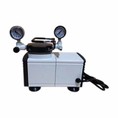
Hey there! I'm a supplier of Oil-free Vacuum Pumps, and today I wanna have a chat about the not-so-great sides of these pumps. Yeah, they've got their perks, but it's important to know the downsides too before you make a purchase.


1. Limited Suction Capacity
One of the first things you gotta consider is the suction capacity of oil-free vacuum pumps. Compared to their oil-lubricated counterparts, oil-free pumps usually have a lower suction capacity. This means they might not be able to create as strong a vacuum in a given amount of time.
For industrial applications where you need to quickly evacuate large volumes of air or gas from a chamber, an oil-free vacuum pump could be a bottleneck. You might find yourself waiting longer for the pump to reach the desired vacuum level, which can slow down your entire production process. For example, in a manufacturing plant that produces electronic components, the time spent waiting for the pump to create a proper vacuum can add up, leading to decreased productivity.
2. Higher Noise Levels
Another drawback is the noise. Oil-free vacuum pumps tend to be noisier during operation. The design of these pumps, which often relies on dry-running mechanisms, can result in more vibration and noise. This can be a real annoyance, especially in a workplace where a quiet environment is necessary, like a laboratory or a research facility.
You might have to invest in additional noise - reduction measures, such as soundproof enclosures, to make the working environment bearable. And let's not forget that these enclosures can add to the overall cost of the pump system. It's not just about the initial purchase price; you've also got to factor in the long - term costs associated with managing the noise.
3. Shorter Lifespan
Oil-free vacuum pumps generally have a shorter lifespan compared to oil-lubricated ones. Without the lubricating and cooling properties of oil, the internal components of an oil-free pump are subject to more wear and tear. The friction between moving parts can cause them to degrade faster, leading to more frequent breakdowns and replacements.
For instance, the vanes or pistons in an oil-free pump can wear out quicker, which can affect the pump's performance and eventually render it useless. This means you'll have to budget for more frequent maintenance and replacement parts, which can add up over time.
4. Sensitivity to Contaminants
These pumps are more sensitive to contaminants in the gas or air they are pumping. Since there's no oil to trap and carry away particles, any dust, dirt, or moisture in the system can cause problems. Contaminants can accumulate on the internal components of the pump, clogging the passages and reducing the pump's efficiency.
In environments where there's a lot of dust or moisture, like a construction site or a humid storage area, an oil-free vacuum pump might not be the best choice. You might need to install additional filtration systems to protect the pump, but these filters also need to be regularly replaced, adding to the maintenance workload.
5. Limited Temperature Range
Oil-free vacuum pumps also have a more limited temperature range of operation. They are often not as effective in extreme temperature conditions. In high - temperature environments, the dry - running components can overheat, which can damage the pump and reduce its performance.
On the other hand, in very cold temperatures, the materials used in the pump can become brittle, increasing the risk of cracks and failures. This means you need to carefully consider the environmental conditions where the pump will be used. If you're operating in a place with extreme temperatures, you might have to look for alternative pump solutions.
6. Higher Initial Cost
When it comes to the initial purchase price, oil-free vacuum pumps can be more expensive than oil-lubricated ones. The advanced technology and design required to make these pumps operate without oil contribute to the higher cost. This can be a significant barrier for small businesses or budget - conscious consumers.
Even though you might save on oil changes and related maintenance in the long run, the upfront cost can still be a deterrent. You've got to weigh the long - term savings against the initial investment to determine if an oil-free vacuum pump is the right choice for you.
7. Limited Application Range
Oil-free vacuum pumps might not be suitable for all types of applications. For example, in applications where the pumped gas contains corrosive substances, the dry - running components of an oil-free pump can be easily damaged. Oil-lubricated pumps, on the other hand, can better handle some corrosive gases because the oil can act as a barrier.
Also, in applications that require a very high - vacuum level, like in some semiconductor manufacturing processes, oil-free pumps might not be able to meet the requirements. You might need to use more complex and expensive pump systems to achieve the desired vacuum level.
8. Performance Degradation with Time
Over time, the performance of an oil-free vacuum pump can degrade. As the internal components wear out, the pump's ability to create and maintain a vacuum can decline. You might notice that it takes longer for the pump to reach the desired vacuum level, or that the vacuum level is not as stable as it used to be.
This performance degradation can be a real problem, especially in applications where consistent vacuum performance is crucial. For example, in a pharmaceutical manufacturing process, any deviation in vacuum levels can affect the quality of the final product.
Despite these disadvantages, oil-free vacuum pumps still have their place in many industries. They are great for applications where oil contamination is a concern, such as in the food and beverage industry or in some medical applications. If you're interested in learning more about our Oil-free Vacuum Pump, or if you have any questions about how these pumps can work for your specific needs, don't hesitate to get in touch. We're here to help you make the right choice.
And if you're in the field of microbiology, you might also be interested in our Microbial Limit Test Holder. It's a great addition to your laboratory equipment.
If you're thinking about purchasing an oil-free vacuum pump or have any questions about the pros and cons we've discussed here, feel free to reach out. We can have a detailed discussion about your requirements and help you find the best solution for your business.
References
- "Vacuum Technology Handbook"
- "Industrial Pump Selection and Application Guide"
- "Microbiology Laboratory Equipment Manual"