


Chromatography media plays a crucial role in biotechnology, offering a wide range of applications that are essential for various processes. As a chromatography media supplier, I've seen firsthand how these materials are used in different biotech scenarios. Let's dive into some of the key applications of chromatography media in biotechnology.
Protein Purification
One of the most significant applications of chromatography media in biotechnology is protein purification. Proteins are the workhorses of biological systems, and purifying them to a high degree of purity is essential for research, drug development, and industrial applications. Chromatography media provides a reliable and efficient way to separate proteins from complex mixtures.
For example, ion exchange chromatography is commonly used to separate proteins based on their charge. The chromatography media, such as Silica Based Amorphous Packing, can be functionalized with charged groups that interact with the proteins. Positively charged proteins will bind to negatively charged media, and vice versa. By adjusting the pH and ionic strength of the buffer, proteins can be selectively eluted from the media, resulting in a purified protein fraction.
Another popular method is affinity chromatography. This technique takes advantage of the specific binding between a protein and a ligand immobilized on the chromatography media. For instance, if you're trying to purify an antibody, you can use a media with a protein A or protein G ligand. The antibody will bind specifically to the ligand, and other contaminants can be washed away. Then, the purified antibody can be eluted under specific conditions.
DNA and RNA Separation
Chromatography media is also used for the separation and purification of DNA and RNA. In molecular biology research, it's often necessary to isolate specific DNA or RNA fragments from a mixture. Chromatography techniques can help achieve this goal.
Size exclusion chromatography is a common method for separating DNA and RNA based on their size. The chromatography media consists of porous beads with different pore sizes. Smaller molecules can enter the pores and have a longer path through the column, while larger molecules pass through the column more quickly. This allows for the separation of DNA or RNA fragments based on their molecular weight.
Ion exchange chromatography can also be used for DNA and RNA separation. DNA and RNA are negatively charged molecules, so they can bind to positively charged chromatography media. By adjusting the salt concentration in the buffer, the DNA or RNA can be eluted from the media in a purified form.
Enzyme Isolation
Enzymes are essential for many biological processes, and isolating them in a pure form is crucial for their study and application. Chromatography media is widely used for enzyme isolation.
Hydrophobic interaction chromatography is often used for enzyme purification. Enzymes have hydrophobic regions on their surface, and the chromatography media can be designed to interact with these regions. By adjusting the salt concentration in the buffer, the enzyme can be bound to the media and then eluted under specific conditions.
Affinity chromatography can also be used to isolate enzymes. If an enzyme has a specific substrate or cofactor, a ligand corresponding to that substrate or cofactor can be immobilized on the chromatography media. The enzyme will bind specifically to the ligand, allowing for its purification.
Vaccine Production
In vaccine production, chromatography media is used to purify the vaccine antigens. Vaccines are designed to stimulate the immune system, and it's important to ensure that the vaccine antigens are pure and free from contaminants.
Chromatography techniques such as ion exchange chromatography and size exclusion chromatography can be used to separate the vaccine antigens from other components in the production process. For example, in the production of inactivated vaccines, chromatography media can be used to remove impurities and ensure the purity of the vaccine antigen.
Quality Control in Biotechnology
Chromatography media is also used for quality control in biotechnology. It can be used to analyze the purity and composition of biotech products.
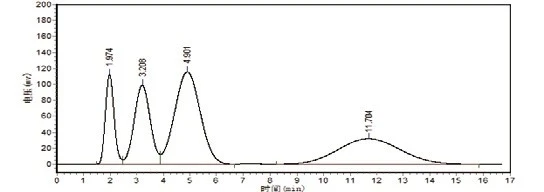
High-performance liquid chromatography (HPLC) is a widely used technique for quality control. The chromatography media used in HPLC can provide high-resolution separation of different components in a sample. By analyzing the chromatogram, it's possible to determine the purity of a product, detect impurities, and quantify the amount of a specific component.
Our Chromatography Media Offerings
As a chromatography media supplier, we offer a variety of high-quality products. For example, our Silica Gel 60 is a popular choice for many chromatography applications. It has a high surface area and good chemical stability, making it suitable for a wide range of separations.
We also offer Silica Based Spherical chromatography media. The spherical shape of the particles provides better flow properties and more efficient separation. These media are designed to meet the needs of different biotech applications, from small-scale research to large-scale industrial production.
Contact Us for Your Chromatography Media Needs
If you're in the biotechnology industry and are looking for high-quality chromatography media, we're here to help. Our products are designed to provide reliable and efficient separation solutions. Whether you're working on protein purification, DNA/RNA separation, enzyme isolation, vaccine production, or quality control, we have the chromatography media that can meet your requirements.

Don't hesitate to reach out to us for more information or to discuss your specific needs. We're committed to providing excellent customer service and helping you achieve your biotech goals.
References
- Smith, J. (2020). Chromatography in Biotechnology. Biotech Journal, 15(2), 123-135.
- Johnson, A. (2019). Applications of Chromatography Media in Protein Purification. Protein Science, 28(4), 789-801.
- Brown, C. (2018). DNA and RNA Separation Using Chromatography. Molecular Biology Review, 12(3), 234-245.