


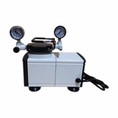
The moisture content of gas plays a crucial role in the performance and efficiency of disc membrane filters during the gas filtration process. As a supplier of Disc Memebrane Filter, I have witnessed firsthand the impact that varying moisture levels can have on these filters. In this blog post, I will delve into the science behind how gas moisture content affects disc membrane filters and provide insights on how to optimize filter performance in different humidity conditions.
Understanding Disc Membrane Filters
Disc membrane filters are widely used in various industries for gas filtration applications. These filters consist of a thin, porous membrane that acts as a barrier to separate particles and contaminants from the gas stream. The membrane is typically made from materials such as MCE Membrane Filter or CN Membrane Filter, which offer high filtration efficiency and chemical resistance.
The principle of operation of disc membrane filters is based on the size exclusion mechanism. The pores in the membrane are designed to allow the passage of gas molecules while retaining particles larger than the pore size. This ensures that the filtered gas is free from contaminants such as dust, bacteria, and other microorganisms.
Impact of Gas Moisture Content on Disc Membrane Filters
The moisture content of the gas can have a significant impact on the performance of disc membrane filters. Here are some of the key ways in which moisture can affect the filtration process:
1. Pore Blockage
When the gas contains a high level of moisture, water droplets can condense on the surface of the membrane. These water droplets can block the pores in the membrane, reducing the effective filtration area and increasing the pressure drop across the filter. As a result, the flow rate of the gas through the filter decreases, and the filtration efficiency may also be compromised.
2. Membrane Swelling
Some membrane materials are hydrophilic, meaning they have an affinity for water. When exposed to high humidity, these membranes can absorb water and swell. Membrane swelling can cause changes in the pore size and structure of the membrane, leading to a decrease in filtration efficiency. In extreme cases, the swelling can be so severe that it causes the membrane to rupture, rendering the filter ineffective.
3. Microbial Growth
Moisture provides a favorable environment for the growth of microorganisms such as bacteria and fungi. When the gas contains moisture, these microorganisms can adhere to the surface of the membrane and form biofilms. Biofilms can not only block the pores in the membrane but also release harmful substances into the filtered gas, posing a risk to the quality of the product or process.
4. Corrosion
In some cases, the moisture in the gas may contain dissolved salts or other corrosive substances. These substances can react with the membrane material and cause corrosion. Corrosion can weaken the membrane structure, leading to membrane failure and a decrease in filtration performance.
Strategies to Mitigate the Impact of Gas Moisture Content
To minimize the impact of gas moisture content on disc membrane filters, several strategies can be employed:
1. Pre - drying the Gas
One of the most effective ways to reduce the moisture content of the gas is to pre - dry it before it enters the filter. This can be achieved using various drying methods such as adsorption drying, refrigeration drying, or membrane drying. Pre - drying the gas ensures that the moisture level is below the critical level at which it can cause problems for the filter.
2. Selecting the Right Membrane Material
When choosing a disc membrane filter, it is important to consider the moisture content of the gas and select a membrane material that is resistant to moisture and microbial growth. Hydrophobic membranes are a good choice for applications where the gas contains high levels of moisture, as they repel water and prevent pore blockage and membrane swelling.
3. Regular Maintenance and Monitoring
Regular maintenance of the disc membrane filters is essential to ensure their optimal performance. This includes replacing the filters at regular intervals, cleaning the filter housing, and monitoring the pressure drop across the filter. Monitoring the pressure drop can help detect any signs of pore blockage or membrane damage early on, allowing for timely replacement of the filter.
4. Using Protective Coatings
Applying a protective coating to the membrane can help prevent moisture absorption and microbial growth. Some coatings can also provide additional chemical resistance, protecting the membrane from corrosion.
Case Studies
Let's take a look at some real - world examples of how gas moisture content has affected disc membrane filters and how the above strategies have been used to mitigate the problems:
Case Study 1: Pharmaceutical Industry
In a pharmaceutical manufacturing facility, a disc membrane filter was used to filter the air in a cleanroom. The air in the cleanroom had a high moisture content due to the presence of steam from the manufacturing processes. Over time, the filter performance deteriorated, and the pressure drop across the filter increased significantly.


Upon inspection, it was found that the pores in the membrane were blocked by water droplets, and there was also evidence of microbial growth on the membrane surface. To address the problem, the air was pre - dried using an adsorption dryer before it entered the filter. Additionally, a hydrophobic membrane was installed, and the filter was replaced at more frequent intervals. These measures resulted in a significant improvement in the filter performance and the quality of the filtered air.
Case Study 2: Food and Beverage Industry
In a food and beverage processing plant, a disc membrane filter was used to filter the carbon dioxide gas used in the carbonation process. The carbon dioxide gas contained a small amount of moisture, which was causing the membrane to swell and the filtration efficiency to decrease.
To solve this problem, a membrane material with low water absorption was selected. The gas was also passed through a coalescing filter to remove any remaining water droplets before entering the disc membrane filter. These steps helped to maintain the filtration performance and ensure the quality of the carbonated products.
Conclusion
The moisture content of the gas has a profound impact on the performance of disc membrane filters. Pore blockage, membrane swelling, microbial growth, and corrosion are some of the key issues that can arise when the gas contains high levels of moisture. However, by pre - drying the gas, selecting the right membrane material, performing regular maintenance, and using protective coatings, these issues can be effectively mitigated.
As a supplier of Disc Memebrane Filter, we understand the importance of providing high - quality filters that can perform well in different operating conditions. If you are facing challenges with gas filtration due to high moisture content or have any questions about our disc membrane filters, we encourage you to contact us for a detailed discussion and potential procurement. Our team of experts is ready to assist you in finding the best filtration solution for your specific needs.
References
- Cheryan, M. Ultrafiltration and Microfiltration Handbook. Technomic Publishing, 1998.
- Porter, M. C. (Ed.). Handbook of Industrial Filtration. Elsevier, 2009.
- Rautenbach, R., & Albrecht, R. Membrane Processes. Wiley - VCH, 1989.