


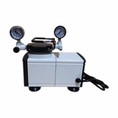
As a supplier of Oil-free Vacuum Pumps, I'm often asked about how these remarkable devices work. In this blog post, I'll take you on a journey through the inner workings of an oil-free vacuum pump, explaining the principles, components, and applications that make them an essential tool in various industries.
The Basics of Vacuum Pumps
Before diving into the specifics of oil-free vacuum pumps, let's first understand what a vacuum pump does. A vacuum pump is a device that removes gas molecules from a sealed volume to create a partial or complete vacuum. This is achieved by creating a pressure difference between the inside of the sealed volume and the surrounding environment, causing the gas molecules to flow from the higher pressure area (inside the volume) to the lower pressure area (outside the volume).
There are several types of vacuum pumps, each with its own unique working principle and application. Some of the most common types include rotary vane pumps, diaphragm pumps, and scroll pumps. Oil-free vacuum pumps, as the name suggests, do not use oil as a lubricant or sealing medium. Instead, they rely on other methods to achieve the same level of performance and reliability.
How Oil-Free Vacuum Pumps Work
Oil-free vacuum pumps work on the principle of positive displacement, which means that they trap a fixed volume of gas and then transfer it from the inlet to the outlet of the pump. This is typically achieved through a series of mechanical components, such as pistons, diaphragms, or scrolls, that move in a coordinated manner to create a vacuum.
One of the most common types of oil-free vacuum pumps is the diaphragm pump. Diaphragm pumps use a flexible diaphragm that moves back and forth to create a vacuum. When the diaphragm moves upward, it creates a low-pressure area on the inlet side of the pump, causing gas molecules to be drawn into the pump chamber. As the diaphragm moves downward, it compresses the gas and forces it out of the pump through the outlet.
Another type of oil-free vacuum pump is the scroll pump. Scroll pumps use two spiral-shaped scrolls that intermesh with each other to create a vacuum. As the scrolls rotate, they trap gas molecules between the scrolls and then move them towards the outlet of the pump. Scroll pumps are known for their high efficiency, low noise level, and long service life.
Components of an Oil-Free Vacuum Pump
An oil-free vacuum pump consists of several key components that work together to create a vacuum. These components include:
- Inlet and Outlet Ports: The inlet port is where the gas enters the pump, while the outlet port is where the gas exits the pump.
- Pump Chamber: The pump chamber is the area where the gas is trapped and compressed. It is typically made of a durable material, such as stainless steel or aluminum, to withstand the high pressures and temperatures generated during operation.
- Diaphragm or Scroll: The diaphragm or scroll is the component that moves back and forth to create a vacuum. It is typically made of a flexible material, such as rubber or plastic, to ensure a tight seal and prevent gas leakage.
- Motor: The motor is the power source that drives the pump. It is typically an electric motor that provides the necessary energy to move the diaphragm or scroll.
- Valves: The valves are used to control the flow of gas into and out of the pump. They are typically made of a durable material, such as stainless steel or brass, to ensure a long service life.
Applications of Oil-Free Vacuum Pumps
Oil-free vacuum pumps are used in a wide range of applications, including:
- Laboratory and Research: Oil-free vacuum pumps are commonly used in laboratories and research facilities to create a vacuum for various experiments and processes. They are ideal for applications where contamination from oil or other lubricants is a concern, such as in the semiconductor industry or in the production of medical devices.
- Medical and Pharmaceutical: Oil-free vacuum pumps are also used in the medical and pharmaceutical industries to create a vacuum for various applications, such as in the production of vaccines, blood transfusions, and other medical procedures. They are ideal for applications where cleanliness and reliability are critical, such as in the production of sterile medical devices.
- Food and Beverage: Oil-free vacuum pumps are used in the food and beverage industry to create a vacuum for various applications, such as in the packaging of food products, the production of beer and wine, and the extraction of essential oils. They are ideal for applications where contamination from oil or other lubricants is a concern, such as in the production of food products that are sensitive to flavor or aroma.
- Industrial and Manufacturing: Oil-free vacuum pumps are used in a wide range of industrial and manufacturing applications, such as in the production of plastics, rubber, and other materials. They are ideal for applications where contamination from oil or other lubricants is a concern, such as in the production of electronic components or in the automotive industry.
Advantages of Oil-Free Vacuum Pumps
Oil-free vacuum pumps offer several advantages over traditional oil-lubricated vacuum pumps, including:
- Cleanliness: Oil-free vacuum pumps do not use oil as a lubricant or sealing medium, which means that they do not produce any oil mist or vapor that could contaminate the surrounding environment or the process being performed. This makes them ideal for applications where cleanliness is critical, such as in the semiconductor industry or in the production of medical devices.
- Low Maintenance: Oil-free vacuum pumps require less maintenance than traditional oil-lubricated vacuum pumps because they do not need to have their oil changed regularly. This reduces the downtime and cost associated with maintenance, making them a more cost-effective solution in the long run.
- Energy Efficiency: Oil-free vacuum pumps are typically more energy-efficient than traditional oil-lubricated vacuum pumps because they do not have the additional energy losses associated with oil lubrication. This means that they can save energy and reduce operating costs over time.
- Quiet Operation: Oil-free vacuum pumps are typically quieter than traditional oil-lubricated vacuum pumps because they do not have the additional noise associated with oil lubrication. This makes them ideal for applications where noise is a concern, such as in laboratory or medical settings.
Conclusion
In conclusion, oil-free vacuum pumps are a versatile and reliable tool that can be used in a wide range of applications. They offer several advantages over traditional oil-lubricated vacuum pumps, including cleanliness, low maintenance, energy efficiency, and quiet operation. If you're in the market for a vacuum pump, I encourage you to consider an oil-free vacuum pump from our company. We offer a wide range of oil-free vacuum pumps that are designed to meet the needs of various industries and applications. To learn more about our products, please visit our website at Oil-free Vacuum Pump.
If you have any questions or would like to discuss your specific requirements, please don't hesitate to contact us. Our team of experts is always available to provide you with the information and support you need to make an informed decision. We look forward to hearing from you and helping you find the perfect oil-free vacuum pump for your needs.


References
- "Vacuum Pumps: Principles and Practice" by Peter A. Lang
- "Handbook of Vacuum Technology" by Helmut G. K. Wegener
- "Vacuum Technology: A Practical Guide" by David J. Santeler