


As a supplier of chromatography media, I've often been asked about the capabilities of our products in separating isomers. Isomers are compounds with the same molecular formula but different structural arrangements, which can have distinct physical and chemical properties. This makes their separation a challenging yet crucial task in various fields, including pharmaceuticals, chemistry, and environmental science. In this blog post, I'll explore the potential of chromatography media in separating isomers and discuss the factors that influence the separation process.
Understanding Isomers and Their Separation Challenges
Isomers can be broadly classified into two main types: structural isomers and stereoisomers. Structural isomers differ in the way their atoms are connected, while stereoisomers have the same connectivity but differ in the spatial arrangement of their atoms. The separation of isomers is challenging because they often have similar physical and chemical properties, such as boiling points, solubility, and reactivity. This makes it difficult to distinguish between them using traditional separation techniques.
Chromatography is a powerful separation technique that exploits the differential interactions between the sample components and the stationary phase of the chromatography column. The stationary phase is typically a solid or a liquid coated on a solid support, while the mobile phase is a liquid or a gas that carries the sample through the column. As the sample passes through the column, the different components interact with the stationary phase to varying degrees, resulting in their separation based on their affinity for the stationary phase.
Chromatography Media for Isomer Separation
At our company, we offer a wide range of chromatography media that can be used for the separation of isomers. These media are designed to provide high selectivity and resolution, allowing for the efficient separation of even the most challenging isomer mixtures. Some of the key chromatography media we offer include:
Silica Based Amorphous Packing
Silica based amorphous packing is a popular choice for isomer separation due to its high surface area and excellent chemical stability. The amorphous structure of the silica particles provides a large number of active sites for interaction with the sample components, resulting in high selectivity and resolution. Our Silica Based Amorphous Packing is available in a variety of particle sizes and pore diameters, allowing for the optimization of the separation conditions based on the specific requirements of the application.
Silica Gel 60
Silica Gel 60 is another widely used chromatography media for isomer separation. It is a highly porous silica material with a narrow pore size distribution, which provides excellent separation efficiency and reproducibility. Our Silica Gel 60 is available in different particle sizes and mesh sizes, making it suitable for a wide range of applications, including column chromatography, thin-layer chromatography, and flash chromatography.
Silica Based Spherical
Silica based spherical packing is a newer type of chromatography media that offers several advantages over traditional amorphous packing materials. The spherical shape of the particles provides better packing efficiency and lower backpressure, resulting in faster separation times and higher resolution. Our Silica Based Spherical packing is available in a variety of particle sizes and surface chemistries, allowing for the customization of the separation conditions based on the specific requirements of the application.
Factors Affecting Isomer Separation
The separation of isomers using chromatography media is influenced by several factors, including the type of chromatography media, the mobile phase composition, the column temperature, and the flow rate. Here's a closer look at each of these factors:
Type of Chromatography Media
The choice of chromatography media is crucial for the successful separation of isomers. Different types of chromatography media have different surface chemistries and pore structures, which can affect the interaction between the sample components and the stationary phase. For example, silica based media are often used for the separation of polar isomers, while reversed-phase media are more suitable for the separation of non-polar isomers.
Mobile Phase Composition
The mobile phase composition plays a critical role in the separation of isomers. The choice of mobile phase depends on the type of chromatography media and the nature of the sample components. In general, a polar mobile phase is used for the separation of polar isomers, while a non-polar mobile phase is used for the separation of non-polar isomers. The addition of modifiers, such as acids, bases, or salts, can also be used to improve the separation efficiency and selectivity.
Column Temperature
The column temperature can have a significant impact on the separation of isomers. Increasing the column temperature can increase the solubility of the sample components in the mobile phase, resulting in faster elution times and improved separation efficiency. However, too high a temperature can also cause thermal degradation of the sample components, leading to poor separation performance. Therefore, it is important to optimize the column temperature based on the specific requirements of the application.
Flow Rate
The flow rate of the mobile phase can also affect the separation of isomers. A higher flow rate can reduce the analysis time, but it can also decrease the separation efficiency and resolution. On the other hand, a lower flow rate can improve the separation performance, but it can also increase the analysis time. Therefore, it is important to optimize the flow rate based on the specific requirements of the application.
Applications of Isomer Separation
The separation of isomers using chromatography media has a wide range of applications in various fields, including:
Pharmaceuticals
In the pharmaceutical industry, the separation of isomers is crucial for the development and quality control of drugs. Many drugs are chiral compounds, which means they exist in two or more isomeric forms. These isomers can have different pharmacological activities, toxicities, and pharmacokinetic properties. Therefore, it is important to separate and quantify the individual isomers to ensure the safety and efficacy of the drugs.
Chemistry
In the field of chemistry, the separation of isomers is used for the identification and characterization of organic compounds. Isomers can have different physical and chemical properties, which can be used to distinguish between them. Chromatography is a powerful tool for the separation and analysis of isomers, allowing for the determination of their structure and purity.

Environmental Science
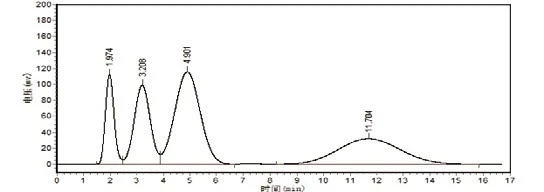
In environmental science, the separation of isomers is used for the analysis of environmental pollutants. Many environmental pollutants, such as polycyclic aromatic hydrocarbons (PAHs) and polychlorinated biphenyls (PCBs), exist in multiple isomeric forms. These isomers can have different toxicities and environmental fates. Therefore, it is important to separate and quantify the individual isomers to assess the environmental impact of these pollutants.
Conclusion
In conclusion, chromatography media can be effectively used for the separation of isomers. The choice of chromatography media, the mobile phase composition, the column temperature, and the flow rate are all important factors that need to be optimized to achieve the best separation performance. At our company, we offer a wide range of chromatography media that can be used for the separation of isomers, including Silica Based Amorphous Packing, Silica Gel 60, and Silica Based Spherical. Our products are designed to provide high selectivity and resolution, allowing for the efficient separation of even the most challenging isomer mixtures.
If you're interested in learning more about our chromatography media or have specific requirements for isomer separation, please don't hesitate to contact us. Our team of experts is always ready to assist you in finding the best solution for your application.
References
- Snyder, L. R., Kirkland, J. J., & Glajch, J. L. (2010). Practical HPLC Method Development. Wiley.
- Poole, C. F. (2003). Chromatography Today. Elsevier.
- Armstrong, D. W., & Henry, S. J. (1998). Chiral Separations by Liquid Chromatography. Wiley-VCH.