


Hey there! As a supplier of vacuum filtration systems, I often get asked if these systems can be used for filtering wastewater. Well, the short answer is yes, but there's a lot more to it than that. Let's dive in and explore the ins and outs of using a vacuum filtration system for wastewater treatment.
How Vacuum Filtration Works
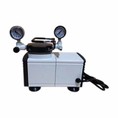
First off, let's quickly go over how a vacuum filtration system works. In simple terms, it uses a vacuum pump to create a pressure difference across a filter medium. This pressure difference forces the liquid (in this case, wastewater) through the filter, leaving behind the solid particles. The filtered liquid then collects in a receiving flask, while the solids remain on the filter.
The beauty of vacuum filtration is that it's a relatively simple and efficient process. It can handle a wide range of particle sizes, from large debris to fine colloids. And compared to other filtration methods, it can often achieve higher flow rates and better separation efficiency.
Advantages of Using Vacuum Filtration for Wastewater
There are several reasons why a vacuum filtration system can be a great choice for filtering wastewater.
1. Versatility
Vacuum filtration systems can be used with a variety of filter media, such as filter paper, membranes, and sintered glass. This means they can be tailored to suit different types of wastewater and filtration requirements. For example, if you're dealing with wastewater that contains large particles, you might use a coarse filter paper. On the other hand, if you need to remove fine contaminants, a membrane filter would be a better option.
2. Efficiency
As I mentioned earlier, vacuum filtration can achieve high flow rates and good separation efficiency. This is especially important when dealing with large volumes of wastewater. By using a vacuum to pull the liquid through the filter, you can speed up the filtration process and reduce the time it takes to treat the wastewater.
3. Cost-Effectiveness
Compared to some other wastewater treatment methods, vacuum filtration can be relatively cost-effective. The equipment is generally less expensive to purchase and maintain, and the filter media are often reusable or replaceable at a low cost. Additionally, because vacuum filtration can achieve good separation efficiency, it can reduce the need for further treatment steps, which can save both time and money in the long run.
Limitations and Considerations
Of course, like any filtration method, vacuum filtration also has its limitations and considerations.
1. Particle Size and Concentration
While vacuum filtration can handle a wide range of particle sizes, there are limits to what it can effectively filter. If the wastewater contains very fine particles or a high concentration of solids, the filter may become clogged quickly, reducing the flow rate and the efficiency of the filtration process. In such cases, pre-treatment steps, such as sedimentation or flocculation, may be necessary to remove the larger particles and reduce the solids concentration before vacuum filtration.
2. Compatibility with Wastewater Components
The filter media used in vacuum filtration systems need to be compatible with the components of the wastewater. Some chemicals or contaminants in the wastewater may react with the filter media, causing damage or reducing their effectiveness. For example, acidic or alkaline wastewater may require the use of a filter media that is resistant to corrosion.
3. Maintenance and Cleaning
Regular maintenance and cleaning of the vacuum filtration system are essential to ensure its proper operation. The filter media need to be replaced or cleaned periodically to prevent clogging and maintain the filtration efficiency. Additionally, the vacuum pump and other components of the system need to be inspected and serviced regularly to prevent breakdowns and ensure a long service life.
Our Vacuum Filtration Systems for Wastewater
At our company, we offer a range of vacuum filtration systems that are suitable for filtering wastewater. Our Glass Six Branches Vacuum Filtration System is a popular choice for laboratories and small-scale wastewater treatment applications. It features six filtration branches, allowing you to filter multiple samples simultaneously. The glass construction makes it resistant to corrosion and easy to clean, and it can be used with a variety of filter media.
If you're looking for a more robust and durable option, our Stainless Steel Six Branches Vacuum Filtration System is a great choice. It's made of high-quality stainless steel, which is resistant to corrosion and can withstand harsh operating conditions. Like the glass system, it also has six filtration branches and can be used with different filter media.
And for smaller-scale applications or when space is limited, our Glass Three Branches Vacuum Filtration System is a compact and efficient option. It has three filtration branches and is made of glass, making it easy to clean and compatible with a wide range of filter media.
Conclusion
So, can a vacuum filtration system be used for filtering wastewater? Absolutely! It offers a number of advantages, including versatility, efficiency, and cost-effectiveness. However, it's important to consider the limitations and ensure that the system is properly designed and maintained for the specific wastewater application.


If you're interested in learning more about our vacuum filtration systems or have any questions about using them for wastewater treatment, don't hesitate to get in touch. We'd be happy to discuss your requirements and help you find the right solution for your needs.
References
- Perry, R. H., & Green, D. W. (1997). Perry's Chemical Engineers' Handbook. McGraw-Hill.
- Svarovsky, L. (1990). Solid-Liquid Separation. Butterworth-Heinemann.