


Can a vacuum filtration system be used for continuous filtration? That's a question I get asked a lot as a supplier of vacuum filtration systems. In this blog, I'll share my insights on this topic, drawing from my experience in the industry.


First off, let's understand what vacuum filtration is. It's a technique that uses a vacuum to speed up the filtration process. Instead of relying on gravity alone to pull the liquid through the filter medium, a vacuum creates a pressure difference that forces the liquid through more quickly. This makes it a popular choice in many laboratories and industrial settings where time is of the essence.
Now, the big question: can it be used for continuous filtration? The short answer is yes, but it depends on a few factors.
Factors Affecting Continuous Filtration with Vacuum Systems
1. Filter Medium and Clogging
One of the main challenges in continuous filtration is filter clogging. As the filter traps solid particles, the pores gradually become blocked, reducing the flow rate. In a continuous process, this can be a major issue. If the clogging happens too quickly, the system might not be able to maintain a consistent flow, and the filtration efficiency will drop.
However, there are solutions. We offer a range of filter media with different pore sizes and materials to suit various applications. For example, in some cases, using a pre - filter can help trap larger particles before they reach the main filter, reducing the risk of clogging. Also, some of our Stainless Steel One Branch Vacuum Filtration System are designed with features that make it easier to clean or replace the filter during operation, minimizing downtime.
2. Vacuum Source and Capacity
The vacuum source is crucial for continuous filtration. A weak vacuum might not be able to maintain the necessary pressure difference to drive the liquid through the filter at a consistent rate. On the other hand, an overpowered vacuum could cause the filter to rupture or damage the sample.
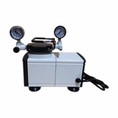
We recommend choosing a vacuum source with sufficient capacity for your specific application. Our systems are compatible with a variety of vacuum pumps, and we can help you select the right one. For larger - scale continuous filtration, our Stainless Steel Three Branches Vacuum Filtration System can be a great option as it allows for multiple filtration processes to run simultaneously, increasing the overall throughput.
3. Sample Characteristics
The nature of the sample being filtered also plays a role. Samples with high solid content or viscous liquids can be more challenging to filter continuously. Viscous liquids flow more slowly, and high - solid samples are more likely to cause clogging.
For viscous samples, you might need to adjust the temperature or use a different filter medium. Our Glass Three Branches Vacuum Filtration System is often a good choice for samples that require a more gentle filtration process, as glass is chemically inert and can handle a wider range of sample types.
Advantages of Continuous Filtration with Vacuum Systems
Despite the challenges, there are many advantages to using a vacuum filtration system for continuous filtration.
1. Time - Saving
Continuous filtration can significantly reduce the overall processing time. Instead of running multiple batch filtrations, you can have a single, continuous process that runs for an extended period. This is especially beneficial in industries where large volumes of samples need to be processed quickly, such as the pharmaceutical or food and beverage industries.
2. Consistent Quality
Since the filtration process is continuous, it's easier to maintain a consistent quality of the filtrate. The flow rate and pressure can be more precisely controlled, ensuring that each batch of the filtrate has the same characteristics.
3. Cost - Efficiency
In the long run, continuous filtration can be more cost - effective. It reduces labor costs associated with batch processing, and the higher throughput means you can produce more with the same equipment.
Real - World Applications
There are numerous real - world applications where continuous vacuum filtration is used.
1. Biotechnology
In biotech labs, continuous filtration is used to separate cells from culture media, purify proteins, and remove contaminants from biological samples. Our vacuum filtration systems are designed to meet the strict requirements of these applications, such as maintaining sterility and preventing sample damage.
2. Chemical Industry
In the chemical industry, continuous filtration is used to separate solids from liquids in chemical reactions, purify solvents, and recover valuable products. The ability to handle different chemical substances and high - volume processing makes our systems a popular choice in this sector.
3. Environmental Monitoring
For environmental monitoring, continuous filtration is used to analyze water samples for pollutants, sediment, and microorganisms. Our systems can be easily integrated into monitoring stations, providing reliable and continuous data collection.
Conclusion
So, to sum it up, a vacuum filtration system can definitely be used for continuous filtration, but it requires careful consideration of factors like filter clogging, vacuum source, and sample characteristics. At our company, we've been in the business of supplying high - quality vacuum filtration systems for years, and we have the expertise to help you set up a continuous filtration process that meets your specific needs.
If you're interested in learning more about our products or discussing your continuous filtration requirements, don't hesitate to reach out. We're here to assist you in finding the best solution for your application.
References
- "Filtration Principles and Practices" by Amyn S. Teja.
- "Handbook of Industrial Filtration" edited by Peter A. Wakeman and Alan S. Tarleton.