


Can a microbiology filter funnel be used for filtering large volumes?
In the realm of microbiology, filter funnels play a crucial role in separating microorganisms and other particles from liquids. They are widely used in laboratories for various applications, such as water quality testing, food and beverage analysis, and pharmaceutical research. However, a common question that arises among researchers and technicians is whether a microbiology filter funnel can be used for filtering large volumes of liquid. In this blog post, we will explore this question in detail and provide insights based on our experience as a microbiology filter funnel supplier.
Understanding Microbiology Filter Funnels
Before delving into the question of filtering large volumes, it is essential to understand the basic principles and design of microbiology filter funnels. These funnels are typically made of high - quality materials such as borosilicate glass or plastic, which are resistant to chemicals and heat. They are designed to hold a filter membrane, which is the key component responsible for separating particles from the liquid.
The filter membrane has a specific pore size, which can range from very fine (e.g., 0.22 micrometers) to relatively coarse. The choice of pore size depends on the type of particles to be filtered. For example, a 0.22 - micrometer filter membrane is commonly used to remove bacteria from a liquid sample, as most bacteria are larger than this pore size.
Microbiology filter funnels come in different sizes and capacities. Some of the common sizes available in the market include 100ml Whole Set Microbiology Filter Funnel, 60mm Microbiology Filter Funnel, and 250ml Microbiology Filter Funnel. These different sizes are designed to meet the diverse needs of laboratories.
Factors Affecting the Filtration of Large Volumes
When considering using a microbiology filter funnel for filtering large volumes of liquid, several factors need to be taken into account:
-
Filter Capacity: The capacity of the filter funnel itself is an obvious factor. A small - capacity funnel, such as a 100ml funnel, may not be suitable for filtering large volumes directly. If you try to pour a large volume of liquid into a small - capacity funnel, it will overflow, leading to a messy and inefficient filtration process. Larger - capacity funnels, like the 250ml funnel, are more appropriate for handling relatively larger volumes, but there are still limitations.
-
Filter Membrane Loading: As the liquid passes through the filter membrane, particles start to accumulate on the surface of the membrane. Over time, this accumulation can lead to clogging of the membrane pores. When filtering large volumes, the rate of particle accumulation is higher, and the membrane is more likely to clog quickly. Once the membrane is clogged, the filtration rate slows down significantly, and in some cases, it may even stop completely.
-
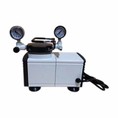
Filtration Pressure: To maintain an acceptable filtration rate when filtering large volumes, additional pressure may be required. This can be achieved through methods such as using a vacuum pump or a pressure - driven filtration system. However, applying too much pressure can cause damage to the filter membrane, leading to breakthrough of particles and inaccurate results.
-
Time and Efficiency: Filtering large volumes of liquid through a microbiology filter funnel can be a time - consuming process. As the filtration rate decreases due to membrane clogging, the overall time required for filtration increases. This can be a significant drawback in a laboratory setting where time is often of the essence.
Strategies for Filtering Large Volumes
Despite the challenges, there are several strategies that can be employed to use microbiology filter funnels for filtering large volumes:
- Multiple Filtration Runs: Instead of trying to filter the entire large volume in one go, you can divide the liquid into smaller portions and perform multiple filtration runs. For example, if you have 1 liter of liquid to filter, you can divide it into ten 100ml portions and filter each portion separately using a 100ml filter funnel. This approach reduces the risk of membrane clogging and ensures a more efficient filtration process.
- Pre - Filtration: Using a pre - filter can help remove larger particles from the liquid before it reaches the main filter membrane. A pre - filter typically has a larger pore size than the main filter membrane, allowing it to capture larger debris and prevent them from clogging the main membrane. This can significantly extend the lifespan of the main filter membrane and improve the overall filtration efficiency when dealing with large volumes.
- Using Larger - Capacity Funnels and Membranes: Opting for larger - capacity filter funnels and membranes with a larger surface area can also be beneficial. Larger membranes can accommodate more particles before clogging, and larger funnels can hold more liquid at once, reducing the need for multiple refills.
Our Product Offerings for Large - Volume Filtration
As a microbiology filter funnel supplier, we understand the challenges associated with filtering large volumes. That's why we offer a range of products designed to address these issues.


Our 250ml Microbiology Filter Funnel is a popular choice for laboratories that need to filter relatively larger volumes. It is made of high - quality materials, ensuring durability and chemical resistance. The funnel is designed to hold a standard - sized filter membrane, which can be easily replaced when needed.
In addition, we also provide a selection of filter membranes with different pore sizes and surface areas. Our experts can help you choose the most appropriate membrane for your specific large - volume filtration needs. Whether you are filtering water samples with a high particle load or performing a large - scale pharmaceutical filtration, we have the right products to meet your requirements.
Conclusion
In conclusion, while a microbiology filter funnel can be used for filtering large volumes of liquid, it comes with certain challenges. By considering factors such as filter capacity, membrane loading, filtration pressure, and time efficiency, and by implementing appropriate strategies like multiple filtration runs, pre - filtration, and using larger - capacity funnels and membranes, it is possible to achieve successful large - volume filtration.
If you are in need of microbiology filter funnels or related products for your large - volume filtration applications, we invite you to contact us for further information and to discuss your specific needs. Our team of experts is ready to assist you in finding the best solutions for your laboratory.
References
- Atlas, R. M., & Bartha, R. (1998). Microbial Ecology: Fundamentals and Applications. Benjamin/Cummings Publishing Company.
- Gerhardt, P. (Ed.). (1994). Methods for General and Molecular Bacteriology. American Society for Microbiology.
- Pfaller, M. A., & Diekema, D. J. (2007). Antifungal susceptibility testing: practical aspects and current challenges. Clinical Microbiology Reviews, 20(1), 1–23.