


When considering the application of microbiology filter funnels in field settings, it is essential to assess their suitability comprehensively. As a supplier of microbiology filter funnels, I have in - depth knowledge of these products and their performance in various environments.


The Basics of Microbiology Filter Funnels
Microbiology filter funnels are crucial tools in microbiological research and analysis. They are designed to separate microorganisms from a liquid sample by filtering the liquid through a porous membrane. The membrane has a specific pore size that allows the passage of the liquid while retaining the microorganisms. This separation is fundamental for tasks such as counting viable microorganisms, detecting specific pathogens, and studying the microbial composition of a sample.
These funnels are typically made of high - quality materials such as borosilicate glass or medical - grade plastics. Borosilicate glass funnels offer excellent chemical resistance and can withstand high temperatures, making them suitable for sterilization processes. Plastic funnels, on the other hand, are lightweight, disposable in some cases, and cost - effective.
Advantages of Using Microbiology Filter Funnels in the Field
- Portability
One of the significant advantages of using microbiology filter funnels in the field is their portability. Our 100ml Microbiology Filter Funnel and 250ml Microbiology Filter Funnel are designed with a compact and lightweight structure. They can be easily carried in a field kit, along with other necessary equipment such as filtration membranes, syringes, and collection containers. This portability enables researchers to collect and process samples directly at the sampling site, reducing the risk of sample contamination during transportation. - Immediate Sample Processing
In field research, immediate sample processing is often crucial. Microbiology filter funnels allow researchers to filter samples on - site, which is particularly important when studying samples that are sensitive to environmental changes. For example, in water quality monitoring, the microbial composition of water samples can change rapidly if not processed promptly. By using a filter funnel, researchers can quickly separate microorganisms from the water sample and preserve them for further analysis. - Versatility
Microbiology filter funnels can be used with a wide range of sample types, including water, soil extracts, and biological fluids. This versatility makes them suitable for various field research projects, such as environmental microbiology studies, food safety inspections, and clinical diagnostics in remote areas. Our 100ml Whole Set Microbiology Filter Funnel comes with all the necessary components for different sample types, providing a convenient solution for field researchers.
Challenges of Using Microbiology Filter Funnels in the Field
- Lack of Sterile Conditions
Maintaining sterile conditions in the field can be challenging. Unlike laboratory settings, where strict aseptic techniques can be followed, the field environment is often exposed to dust, dirt, and other contaminants. This can lead to sample contamination during the filtration process. To address this issue, it is important to use pre - sterilized filter funnels and membranes. Our products are available in sterile packaging, which helps to minimize the risk of contamination. - Power Supply
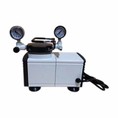
Some microbiology filter funnels require a power supply for operation, such as those that use vacuum pumps for filtration. In field settings, access to a reliable power source may be limited. However, there are manual or battery - operated filtration systems available. Manual filtration systems, such as syringe - driven filters, can be used without the need for electricity. Battery - operated vacuum pumps offer a more efficient alternative for larger volume filtrations when a power outlet is not available. - Environmental Conditions
Field research is often conducted in diverse environmental conditions, including extreme temperatures, high humidity, and strong winds. These conditions can affect the performance of microbiology filter funnels. For example, high humidity can cause the filter membrane to become wet and reduce its filtration efficiency. Extreme temperatures can also damage the materials of the funnel. When selecting a filter funnel for field use, it is important to consider the environmental conditions of the sampling site and choose a product that can withstand these conditions.
Strategies to Overcome Challenges
- Proper Training
Proper training of field researchers is essential to ensure the correct use of microbiology filter funnels. Researchers should be trained in aseptic techniques, filtration procedures, and how to handle the equipment in different environmental conditions. Our company provides training materials and support to help researchers use our products effectively in the field. - Use of Appropriate Accessories
To overcome the challenges of power supply and environmental conditions, appropriate accessories can be used. For example, insulated cases can be used to protect the filter funnel from extreme temperatures. Portable power banks can be used to power battery - operated vacuum pumps. Additionally, using desiccant packs can help to reduce the humidity inside the field kit and protect the filter membranes. - Regular Maintenance and Quality Control
Regular maintenance of microbiology filter funnels is necessary to ensure their proper functioning. Field researchers should inspect the funnels for any signs of damage or wear before each use. Quality control measures, such as testing the filtration efficiency of the membranes, should also be carried out regularly. Our company offers after - sales service and quality control guidelines to help researchers maintain the performance of our products.
Conclusion
Microbiology filter funnels can be suitable for field use, provided that the challenges are properly addressed. Their portability, immediate sample processing capabilities, and versatility make them valuable tools for field research. By choosing the right product, following proper procedures, and using appropriate accessories, researchers can effectively use microbiology filter funnels in diverse field settings.
If you are interested in our microbiology filter funnels for your field research projects, we welcome you to contact us for procurement and further discussions. We are committed to providing high - quality products and excellent service to meet your needs.
References
- Atlas, R. M., & Bartha, R. (1998). Microbial Ecology: Fundamentals and Applications. Benjamin/Cummings Publishing Company.
- Cappuccino, J. G., & Sherman, N. (2014). Microbiology: A Laboratory Manual. Pearson.
- Madigan, M. T., Martinko, J. M., Bender, K. S., Buckley, D. H., & Stahl, D. A. (2015). Brock Biology of Microorganisms. Pearson.